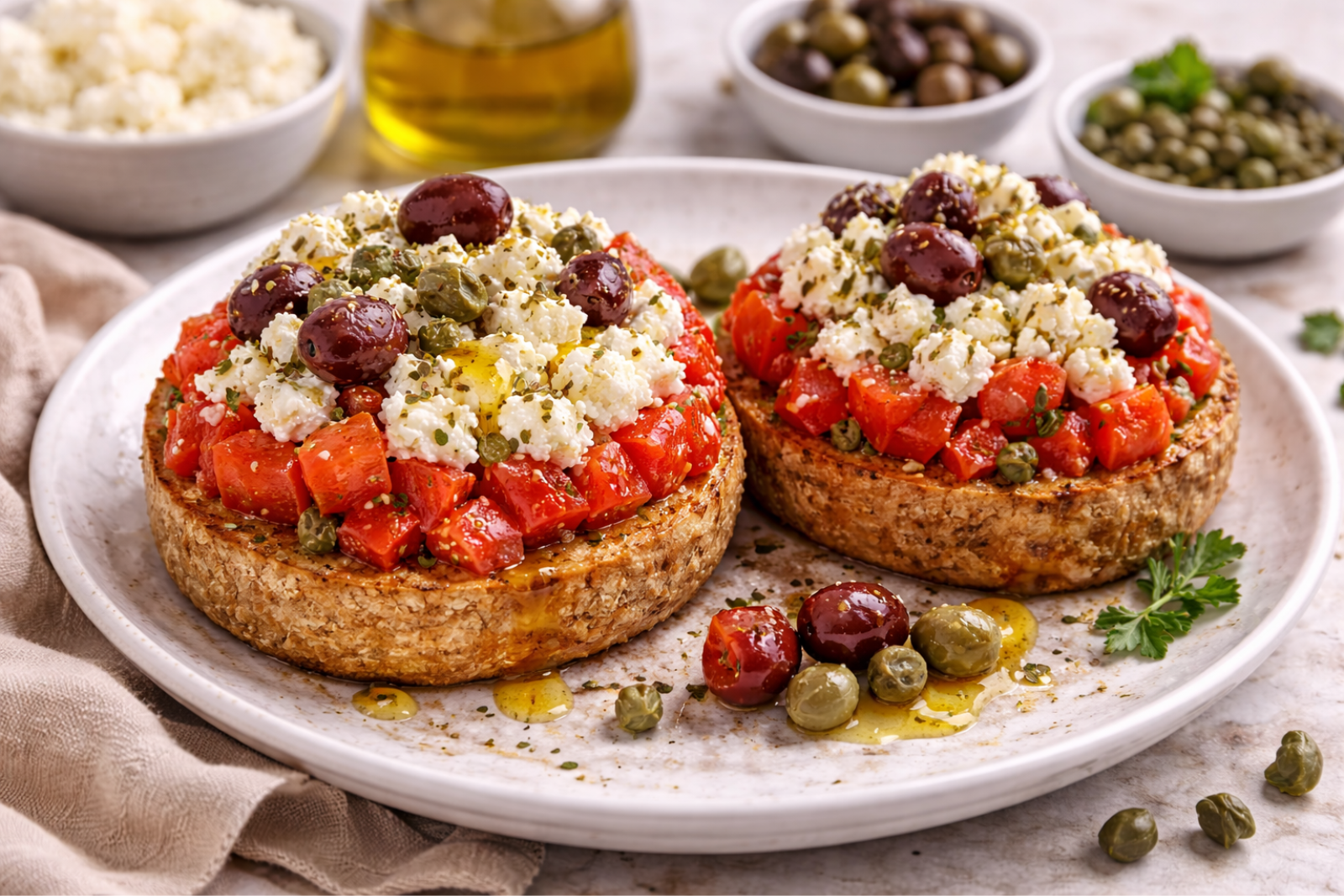
The Rustic Secret: Crafting the Perfect Traditional Dakos Salad
Imagine the warm glow of the Mediterranean sun, the gentle whisper of olive groves, and the vibrant flavors of the Aegean captured in a single, remarkable dish. This is the essence of dakos salad, a culinary treasure hailing from the sun-drenched island of Crete. More than just a salad, it's a rustic masterpiece, elegant in its simplicity, that promises to transport your senses straight to the heart of a Greek summer with every bite. Often hailed as the "Greek bruschetta" or "Cretan salad," dakos is a testament to how humble, high-quality ingredients can combine to create something truly extraordinary.
At its core, dakos salad is a celebration of texture and flavor: the satisfying crunch of barley rusks, the juicy sweetness of ripe tomatoes, the tangy creaminess of feta, and the aromatic kiss of Greek olive oil and oregano. It embodies the very spirit of Greek gastronomy – fresh, wholesome, and deeply satisfying. While its preparation might seem straightforward, mastering the art of dakos lies in understanding the synergy of its components and appreciating the quality that defines true Mediterranean cuisine.
The Unsung Hero: Unpacking the Cretan Rusk
The foundation of any authentic dakos salad is undoubtedly the rusk. Not just any rusk, but specifically the iconic Cretan rusks, known locally as "paximadia." These aren't your average bread slices; they are twice-baked, hard, dry bread, traditionally made to preserve bread for long periods, especially for sailors and farmers. Their unique character is central to the salad's charm and, indeed, gives the dish its very name.
- The "Dakos" Rusk: These are typically thick, substantial slices of rusk, often made from barley flour. When locals refer to "dakos" (ντάκος), they can mean both the rusk itself and the salad made with it. It's a delightful linguistic quirk that speaks to the rusk's undeniable importance.
- Round Barley Rusks: Another popular choice are the smaller, round barley rusks. These offer a slightly different texture and absorb liquids beautifully, becoming wonderfully tender while still retaining a slight bite around the edges.
The secret to transforming these rock-hard rusks into a delectable base for your salad lies in a brief, strategic soak. Unlike croutons, rusks are designed to absorb moisture, turning from brittle to yielding. The key is to dip them quickly in a little water – just enough to soften them slightly without making them soggy. This initial softening allows them to then greedily soak up the glorious juices from the tomatoes and the rich olive oil, becoming a tender, flavorful sponge for all the other ingredients. Without this step, they'd be impossible to eat, but with it, they become an integral part of the dakos salad experience.
While traditional Cretan barley rusks offer an unparalleled authenticity, if you're unable to find them, you can experiment with sturdy alternatives like thick slices of sourdough, whole wheat bread, or even bagels. However, be aware that these will alter the distinctive rustic character of the dish. For a truly authentic taste, seeking out the genuine article is always recommended. To truly appreciate the foundational role of these rusks, and to delve deeper into the historical and cultural significance of this remarkable dish, you might enjoy exploring Dakos Salad: Why This Simple Greek Dish Is a Culinary Masterpiece.
A Symphony of Fresh Flavors: Beyond the Rusk
With the rusk providing the essential textural backbone, the rest of the dakos salad comes alive with a medley of simple yet supremely flavorful ingredients. The beauty of this dish lies in the quality of each component, as there's nowhere for inferior ingredients to hide.
- Sweet, Ripe Tomatoes: These are the vibrant heart of the salad. Diced and allowed to sit, they release their luscious, sun-kissed juices, which are crucial for hydrating the rusks and infusing the dish with their fresh, tangy-sweet essence. The riper and sweeter the tomatoes, the better your dakos will be.
- Authentic Greek Feta Cheese (or Cretan Xynomyzithra): Crumbled generously over the tomatoes, authentic Greek feta cheese adds a briny, tangy counterpoint that is simply irreplaceable. However, for an even more traditional Cretan touch, the local xynomyzithra is a revelation. This soft, creamy, sour-sweet cheese offers a unique taste profile that elevates the dakos to another level, providing a delightful creamy mouthfeel that contrasts beautifully with the rustic rusk. It's truly a "cheese paradise" for those who try it.
- Liquid Gold: Extra Virgin Olive Oil: A generous drizzle of high-quality extra virgin olive oil (EVOO) is non-negotiable. Not only does it add a rich, fruity depth of flavor, but it also helps bind all the ingredients together, adding a luxurious sheen and healthy fats. Ideally, use a Cretan EVOO for an even more authentic experience.
- Briny Olives: Kalamata olives, with their distinct almond shape and robust, fruity flavor, are the traditional choice. Their salty, briny notes add an important layer of complexity and a burst of Mediterranean character.
- Aromatic Greek Oregano: A sprinkle of dried Greek oregano provides the final aromatic flourish. Its potent, slightly peppery, and earthy notes awaken the senses and evoke the wild herb-filled landscapes of Greece.
Each ingredient, while simple on its own, plays a critical role in creating the harmonious balance that defines the perfect dakos salad. The combination is not just delicious; it's a reflection of the Mediterranean diet's emphasis on fresh, seasonal, and minimally processed foods.
Crafting Your Perfect Dakos: Step-by-Step Guide & Tips
The beauty of dakos salad lies in its straightforward preparation. Even a novice cook can achieve spectacular results by following these simple steps and tips:
Ingredients You'll Need:
- 1-2 large Cretan rusks (dakos type or round barley rusks) per serving
- 2-3 ripe, sweet tomatoes, diced
- 100-150g authentic Greek feta cheese (or xynomyzithra), crumbled
- A handful of Kalamata olives, pitted and halved (optional)
- Generous amount of high-quality extra virgin olive oil
- Dried Greek oregano
- Salt and freshly ground black pepper (to taste, often optional due to feta and olives)
Preparation Steps:
- Prepare the Rusks: Briefly dip each side of your rusks in a shallow bowl of water. You want them to soften slightly but still retain some firmness – aim for a quick dip, not a long soak. Arrange them on your serving plate or in individual bowls.
- Dice the Tomatoes: Dice your ripe tomatoes into small cubes. Place them in a bowl and let them sit for a few minutes. This allows them to release their delicious juices, which will be absorbed by the rusks.
- Assemble the Dakos: Spoon the diced tomatoes and their accumulated juices generously over the softened rusks. Distribute evenly.
- Add the Cheese: Crumble the feta or xynomyzithra over the tomatoes. The contrasting white against the red is visually appealing.
- Garnish and Season: Scatter the Kalamata olives (if using) over the cheese. Drizzle a generous amount of extra virgin olive oil over the entire salad. Finish with a liberal sprinkle of dried Greek oregano.
- The Waiting Game: This is a crucial step! While you can eat dakos immediately, allowing it to sit for at least 10-15 minutes (or even longer, up to 30 minutes) before serving allows the rusks to fully absorb the tomato juices and olive oil. The flavors will meld beautifully, and the rusks will become perfectly tender, transforming the dish.
Expert Tips for an Unforgettable Dakos:
- Quality First: As iterated, the simplicity of dakos salad means the quality of each ingredient truly shines. Invest in the best tomatoes, olive oil, and feta you can find.
- Don't Over-Soak: A common mistake is to soak the rusks for too long. They should be tender but still have some structural integrity, not mushy.
- Tomato Juices are Gold: Don't drain the tomato juices! They are essential for hydrating the rusks and infusing them with flavor.
- Taste for Salt: Feta and olives are quite salty, so taste your dakos before adding additional salt. A touch of freshly ground black pepper can enhance the flavors.
- Embrace the Rustic: Dakos is meant to be a simple, rustic dish. Don't worry too much about perfect presentation; its charm lies in its natural, bountiful look.
Beyond the Traditional: Modern Twists and Serving Suggestions
While the traditional dakos salad is perfect in its original form, its popularity across Greece has naturally led to delightful variations. Culinary creativity often leads to new interpretations, allowing for personal preferences without straying too far from the soul of the dish.
- Added Herbs and Spices: Some versions might incorporate fresh basil, finely chopped red onion, or even a few capers for an extra burst of flavor and pungency. A tiny pinch of chilli flakes can also add a subtle warmth.
- Alternative Cheeses: Beyond feta and xynomyzithra, other local Greek cheeses like anthotyros or even a firm mizithra could be experimented with, though they will offer different textures and flavor profiles.
- Protein Boost: For a more substantial meal, some modern takes might include grilled chicken, sardines, or even a fried egg on top, though this moves further away from the traditional concept.
Dakos salad is incredibly versatile. It makes an ideal:
- Light Lunch: Healthy, filling, and refreshing.
- Appetizer or Meze: Perfect for sharing alongside other small plates.
- Accompaniment: Excellent with grilled meats, fish, or as part of a larger Greek feast.
Pair it with a crisp, chilled white wine, a glass of traditional retsina, or simply a glass of cold water, and let the flavors transport you. For those eager to delve deeper into the authentic preparations and cultural significance of this delightful dish, exploring resources like Authentic Cretan Dakos Salad: Your Guide to a Greek Summer Taste can offer even more insights and inspiration.
Conclusion: Savoring the Essence of a Greek Summer
The dakos salad is more than just a recipe; it's an experience, a snapshot of the Mediterranean lifestyle, where simplicity and quality reign supreme. Its enduring popularity, not just in Crete but across all of Greece and beyond, speaks volumes about its irresistible charm. It's a healthy, satisfying, and utterly delicious dish that encapsulates the taste of summer in every bite. Whether you adhere strictly to the traditional rendition or venture into subtle variations, crafting a dakos salad is an invitation to slow down, savor fresh ingredients, and let the memories of precious Greek summers unfold right on your plate. So, gather your quality ingredients, follow these simple steps, and prepare to impress even the most delicate and demanding taste buds with this exquisite, rustic secret.
