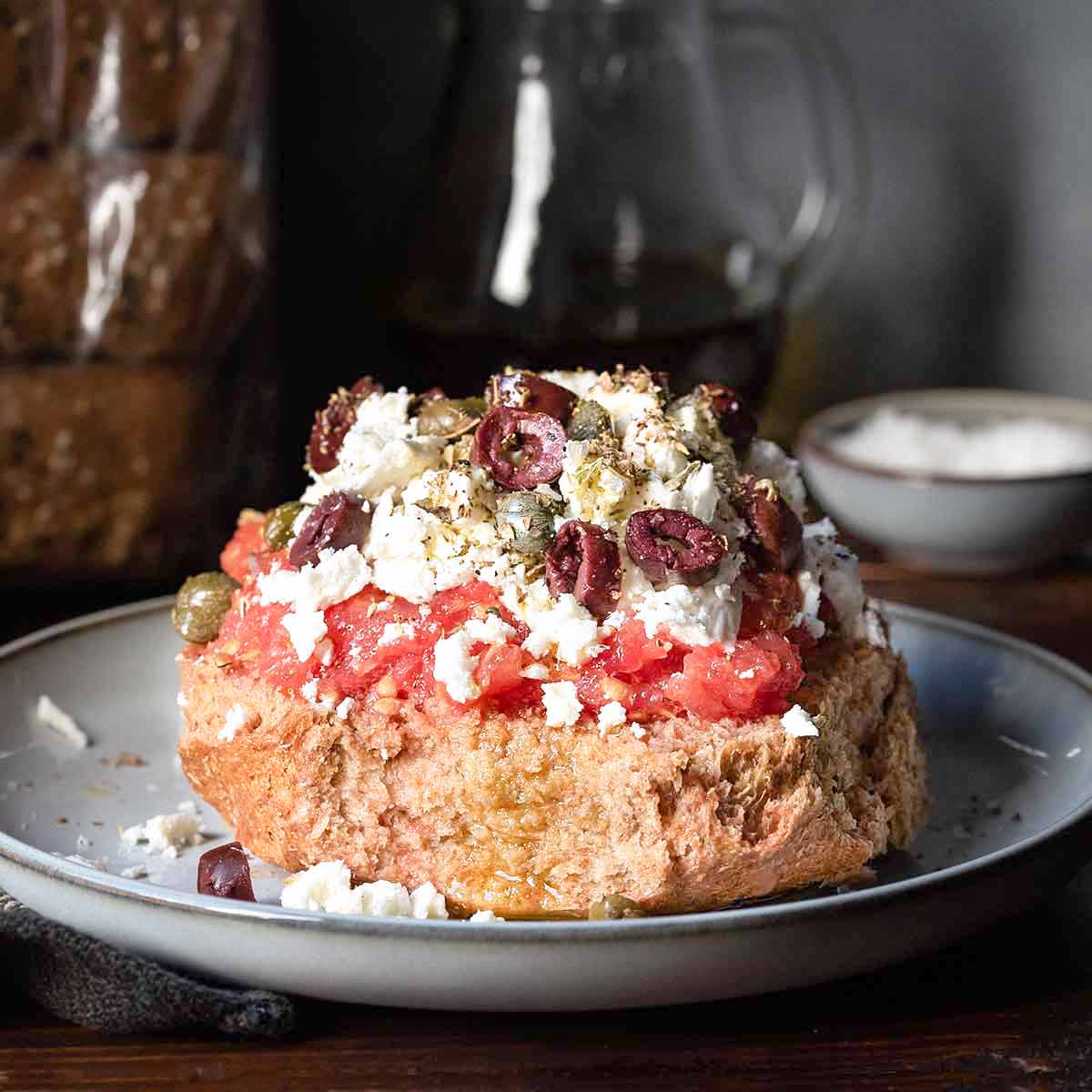
Imagine a sun-drenched afternoon on the mesmerizing island of Crete, a gentle sea breeze kissing your skin, and a plate before you brimming with vibrant colors and tantalizing aromas. This isn't just a daydream; it's the experience delivered by the Authentic Cretan Dakos Salad. More than just a dish, this culinary masterpiece is a taste of Greek summer captured in every bite, offering a refreshingly simple yet profoundly flavorful journey to the heart of Mediterranean cuisine. For anyone seeking to recreate that quintessential Greek summer vibe in their own home, the *dakos salad* is an absolute must-try.
What Exactly is Dakos Salad? Unpacking the Cretan Rusk Foundation
At its core, dakos salad (Κρητικός ντάκος) is a traditional Cretan creation, often hailed as the "Greek bruschetta," though its roots run much deeper. Its identity is inextricably linked to its star ingredient: the Cretan rusk. The very name of the salad, "dakos," originates from these thick, rustic slices of dried bread, a testament to their central role.
Historically, rusks were a ingenious way to preserve bread, allowing it to last for extended periods, especially crucial for sailors and farmers. These aren't your typical soft bread slices; Cretan rusks are incredibly dry and crispy, requiring hydration before consumption. Traditionally, you'll find two main types used for dakos:
- Thick slices of barley rusk (the "dakos" itself): These are substantial, rustic pieces that form the hearty base of the salad.
- Round barley rusks: Smaller and often resembling large croutons, these are equally popular and offer a slightly different texture.
While the name "dakos" specifically refers to the thick rusk slices, the term has evolved in common Greek parlance. When a Greek person says, "Let's make a dako," they are almost certainly referring to the complete *dakos salad*, regardless of which type of rusk is used – a charmingly "crazy Greek people" quirk that highlights the dish's popularity!
Originally a staple across Crete, *dakos salad* has now captivated palates across all of Greece and beyond. Its rise to widespread fame is no surprise; it's a testament to how simple, quality ingredients can combine to create something truly extraordinary. For a deeper dive into the significance and appeal of this seemingly humble dish, explore Dakos Salad: Why This Simple Greek Dish Is a Culinary Masterpiece.
The Quintessential Ingredients: Building Your Perfect Dakos Salad
The magic of an authentic dakos salad lies in the quality and freshness of its few, but mighty, ingredients. Each component plays a vital role in crafting that unforgettable Greek summer taste. Forget complex techniques; focus on sourcing the best you can find.
The Foundation: Cretan Rusks
As discussed, barley rusks are non-negotiable for authenticity. They are dry and crunchy, designed to soak up the juices of the tomatoes and olive oil. If genuine Cretan barley rusks are hard to find, you can explore alternatives, though the flavor profile will differ. Some enthusiasts substitute with thick slices of toasted sourdough, whole wheat bread, or even robust bagels. However, for the true experience, seek out the traditional rusks – many specialty Greek stores or online retailers now carry them.
The Heart: Sweet, Ripe Tomatoes
This is where the salad truly sings. You need ripe, sweet tomatoes, diced to release their natural juices. These juices are crucial for softening the rusks and infusing them with flavor. The taste of perfectly sun-ripened tomatoes is central to the *dakos salad*'s allure.
The Creaminess: Authentic Greek Cheese
Traditionally, dakos salad features either crumbled authentic Greek feta cheese or, even better, a local Cretan cheese called xynomyzithra.
- Feta: The widely recognized, tangy, crumbly Greek cheese adds a salty counterpoint to the sweet tomatoes. Insist on authentic Greek feta, preferably PDO (Protected Designation of Origin), for the best flavor.
- Xynomyzithra: If you can find it, this Cretan gem is a revelation. It boasts a soft, creamy texture with a unique sour and sweet taste, offering a "cheese paradise" experience that elevates the salad significantly.
The Golden Elixir: Extra Virgin Olive Oil
A generous drizzle of high-quality extra virgin olive oil is not just dressing; it's a cornerstone of the *dakos salad*. It moistens the rusks, enhances the flavors of all ingredients, and adds a rich, peppery finish. Opt for a cold-pressed, robust olive oil, ideally from Crete itself.
The Finishing Touches: Olives and Oregano
Kalamata olives, with their distinct briny flavor and meaty texture, are the traditional choice. And no Greek salad is complete without dried Greek oregano, which imparts an earthy, aromatic perfume that instantly transports you to the Mediterranean.
Optional, Yet Delicious Additions:
While the traditional recipe is beautifully simple, variations exist. Some add thinly sliced red onions for a pungent kick, a sprinkle of capers for extra brininess, or fresh basil for an aromatic twist. These additions can personalize your *dakos salad* experience without detracting from its authentic spirit.
Crafting Your Dakos Salad: A Step-by-Step Guide and Expert Tips
Making dakos salad is less about following a rigid recipe and more about embracing simplicity and quality. The process is straightforward, allowing the ingredients to shine.
Step-by-Step Assembly:
- Prepare the Rusks: This is perhaps the most crucial step. Since barley rusks are very dry, they need to be slightly moistened. The traditional method is to briefly dip each side of the rusk in a shallow bowl of water. Be quick – you want to soften it enough to be edible, but not turn it into a soggy mess. It should still retain some texture, as it will continue to absorb liquid from the tomatoes and olive oil. Some prefer to just let the tomato juices do the work, which results in a chewier center and softer edges.
- Layer the Tomatoes: Place the moistened rusk (or rusks) on your plate. Top generously with your diced, ripe tomatoes. Allow them to sit for a few minutes; this gives their juices a chance to seep into the rusk, further softening it and infusing it with flavor.
- Add the Cheese: Crumble the feta or xynomyzithra over the tomatoes.
- Garnish: Scatter Kalamata olives generously over the cheese and tomatoes.
- Drizzle and Season: Pour a liberal amount of high-quality extra virgin olive oil over the entire salad. Finish with a generous sprinkle of dried Greek oregano.
Expert Tips for the Best Dakos Salad:
- The Waiting Game: While you can eat dakos salad immediately, it truly benefits from sitting for 10-15 minutes (or even longer, up to 30 minutes). This allows the rusks to absorb all the delicious tomato juices and olive oil, and for the flavors to meld beautifully. The longer it sits, the softer the rusks will become, transforming from a crisp base into a tender, flavorful foundation.
- Don't Skimp on Olive Oil: The olive oil is key to both flavor and texture. It helps soften the rusks and carries the other flavors.
- Tomato Quality is King: Sweet, ripe, in-season tomatoes will make all the difference. If your tomatoes aren't very juicy, you can lightly crush some before dicing or add a tiny splash of red wine vinegar to the mix.
- Personalize: Feel free to experiment with a sprinkle of capers, thin slices of cucumber, or fresh basil leaves for added complexity and freshness.
Why Dakos Salad is More Than Just a Salad
The dakos salad embodies the very essence of the Mediterranean diet: fresh, whole ingredients, simplicity, and immense flavor. It's not merely a side dish; it's a healthy, filling, and deeply satisfying meal in itself, perfect for a light lunch or a refreshing dinner during warmer months. Its robust nature makes it more substantial than a typical green salad, providing both sustenance and a burst of vibrant taste.
Beyond its nutritional benefits, *dakos salad* offers a sensory experience that transports you straight to the sun-drenched shores of Greece. The combination of the rustic rusk, the juicy tomatoes, the tangy feta, and the aromatic oregano creates a harmony that evokes memories of ancient traditions and timeless summer joy. It's a dish that celebrates simplicity and the power of natural, high-quality ingredients, proving that some of the greatest culinary delights require no elaborate fuss.
So, next time you crave a taste of summer, look no further than the humble yet magnificent dakos salad. It's a culinary journey to Crete that you can embark on right in your own kitchen.
